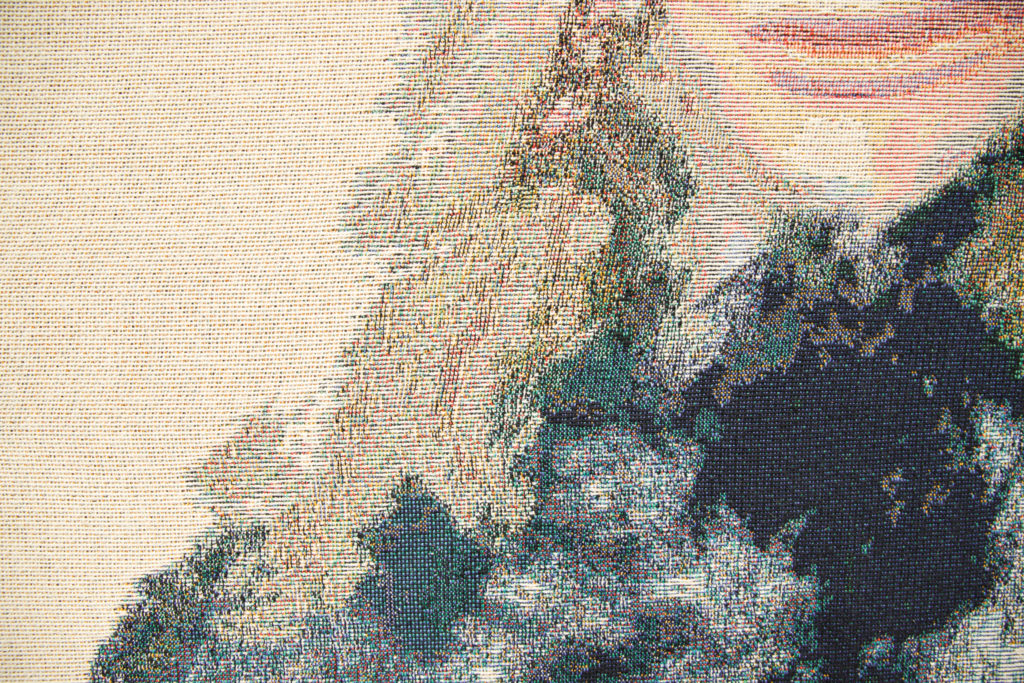
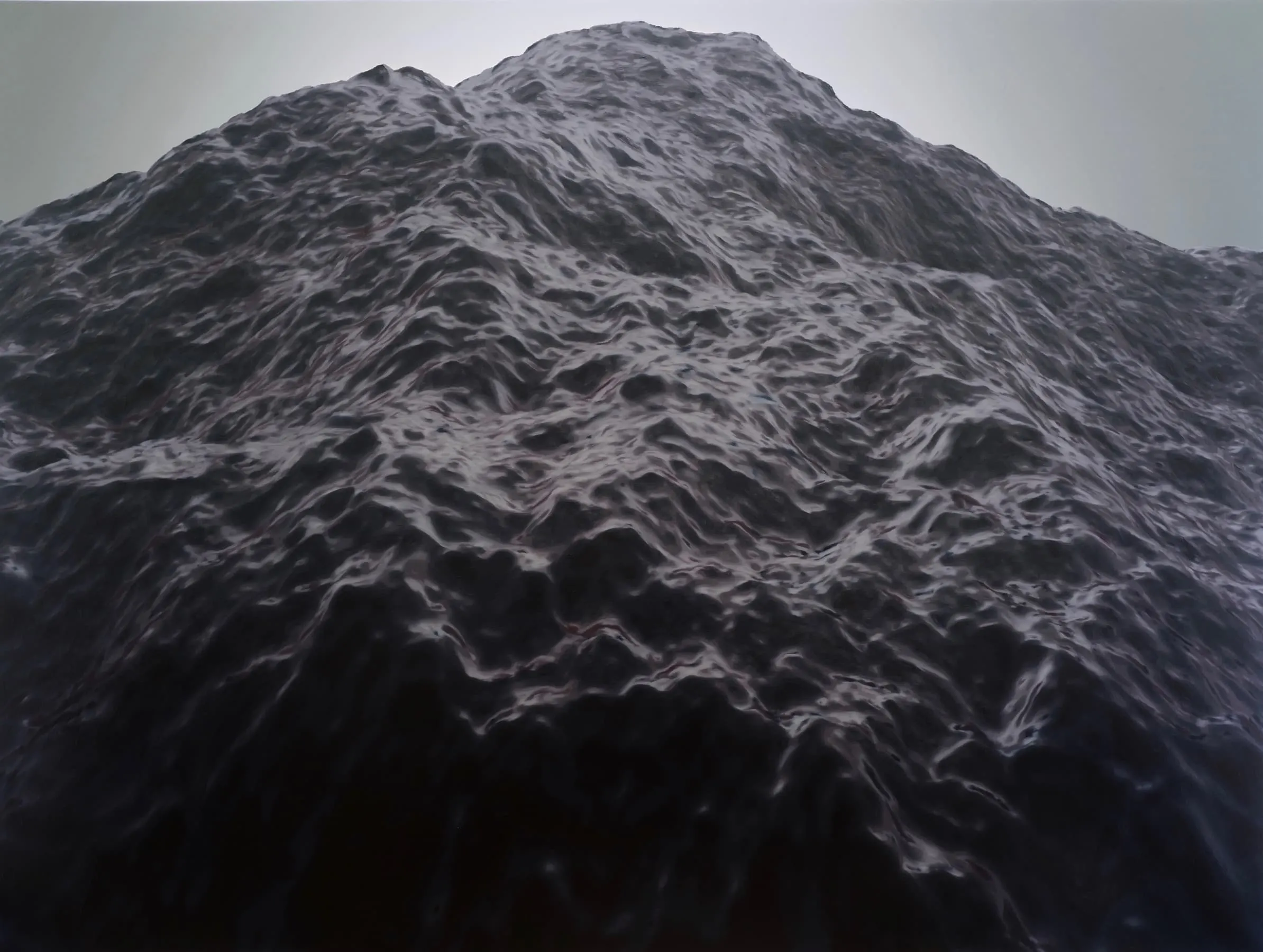
Ry David Bradley (Australian, b. 1979) produces material images of the twenty-first century by feeding digital paintings through dye-sublimation printing or weaving them into large-scale tapestries on a Jacquard loom.,He trained in New Media Video and Internet Art in the early 2000s, then shifted his focus to painting, a medium he felt would not require power or software and would not become outdated through upgrades.,,
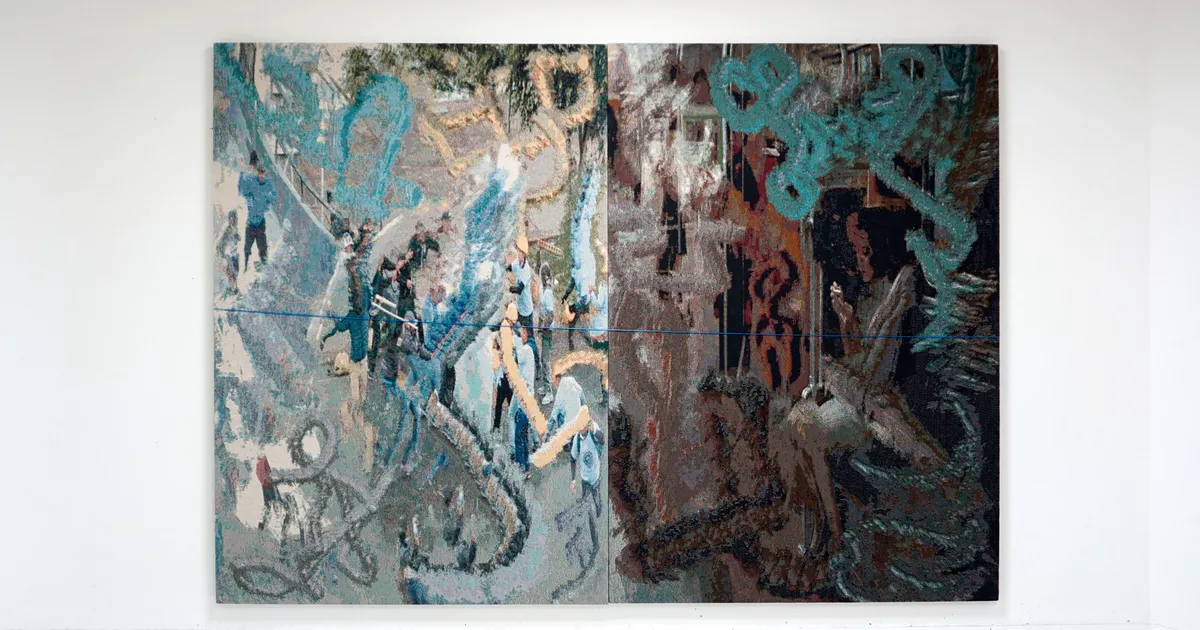
In 2009 he founded PAINTED, ETC., a website chronicling the relationship between technology and painting. He received a Master of Fine Art from the Victorian College of the Arts at the University of Melbourne, graduating in 2013.For Unit London's 2018 exhibition “Looking For U”, he developed custom digital brushes that emulated the facial distortions produced by AI facial-recognition software, then wove the resulting images into tapestries on a Jacquard loom, a device regarded as a precursor to the modern computer.,His tapestry CnN5D+YUNpy (2018), woven from vat-dyed cotton and threaded with an electroluminescent wire, draws a parallel between the history of mechanical looms and modern screen technology. He described the work as intended “To serve as a lasting screen memory of life in 2018”.
At The Hole in New York, Bradley presented “Search History”, his second solo exhibition at the gallery, transforming the space into a curved, cyclorama-style studio hung with eight Jacquard tapestries lit by searching LED spotlights. The tapestries had debuted at HEART Museum in Herning, Denmark, in a two-person installation titled “LETMEIN” with Jon Rafman.
Twenty years after first working in Flash, HTML and After Effects during the Web 1.0 era, Bradley began releasing NFTs, describing the medium as validating rather than changing his practice. His project with ZIEN London pairs 8K non-fungible tokens, roughly 70 megapixels each, in editions of 300, with linen prints carrying an NFC authentication tag minted into the NFT at its creation. For Bradley, digital materials are not representations of physical ones but physical processes in their own right, running on copper, magnetic fields and optical fibres.Bradley is represented by Sullivan+Strumpf in Australia and The Hole in New York, and his work is held in the permanent collections of the National Gallery of Victoria, Herning Museum of Contemporary Art, and the Lyon Housemuseum.