Nancy Burson (American, b. 1948) is an artist and inventor who, in 1981, patented the first computer software for aging and morphing human faces, technology the FBI later adopted to update photographs of missing children.Her composite portraits, which digitally blend multiple faces into one, and her interactive Human Race Machine have made her a pioneer of using computer imaging to question identity, race and perception.,,
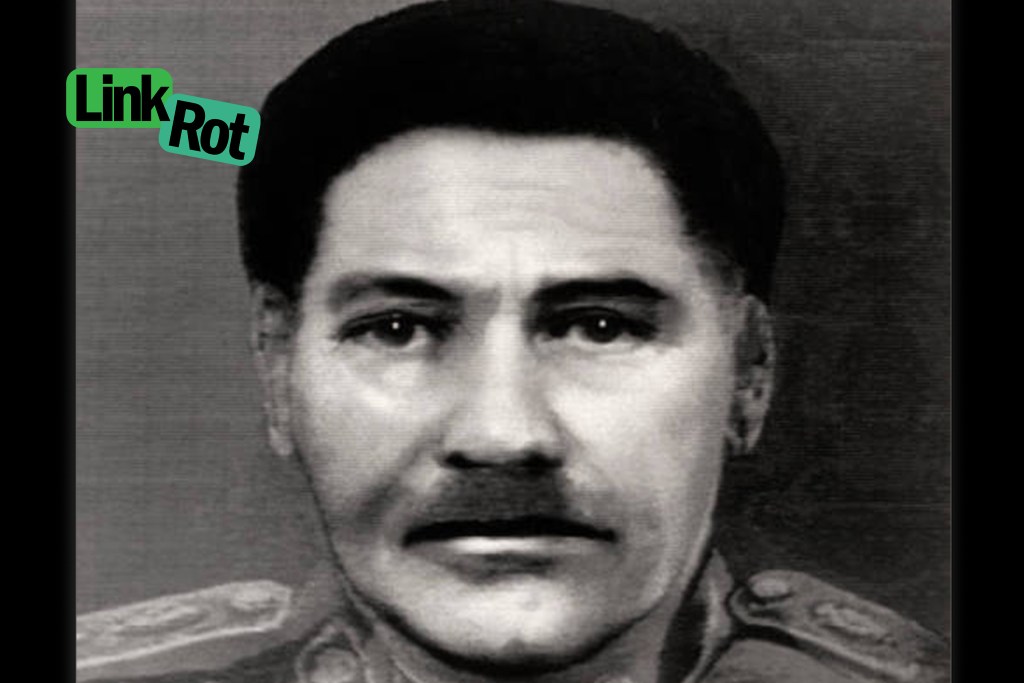
Burson moved to New York in 1968 and, through Experiments in Art and Technology, was connected with early computer graphics researchers while building an interactive age machine.At MIT, paired by Nicholas Negroponte with the molecular biologist Thomas Schneider, she spent about four years developing a grid system for transforming photographs of faces, and the two were granted a patent for it in 1981.,She began working with the FBI on the case of the missing child Etan Patz in 1983, and by 1987 the Bureau had fully licensed her software to help locate missing children and adults. Using the same code, she produced composite portraits merging public figures' faces, including Warhead I (1982), which blended five Cold War leaders in proportion to their countries' nuclear arsenals, and Big Brother (1983), which merged five twentieth-century dictators into one face.
In 2000 she built the Human Race Machine for the Millennium Dome in London, an interactive booth that morphed a visitor's face into one of six racial types, which then toured universities for over a decade as a diversity-education tool.Her work entered the permanent collections of MoMA, the Metropolitan Museum of Art and the Whitney Museum of American Art, and in 2002 her retrospective “Seeing and Believing” traveled from the Grey Art Museum.,In 2018 Time magazine commissioned her to morph the faces of Donald Trump and Vladimir Putin, Trump/Putin, for its Summit Crisis cover.
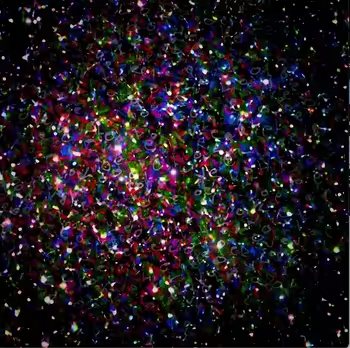
From the mid-1990s, prompted by her own health problems, Burson moved from digital compositing to film photography and later painting, turning to physics-based phenomena of energy and consciousness that she says she can perceive and photograph. Her Quantum Entanglement paintings, built from a repeated two-handed mark, are meant to be viewed through a phone camera, through which faint colors and movement appear; a group was shown in her 2026 solo exhibition “Light Matter” at Heft Gallery.Her video A Projection of Love Through the Stars, which combines hand-drawn text with AI-generated imagery of deep space, appeared in the group exhibition “Body Anxiety in the Age of AI” on objkt.com.