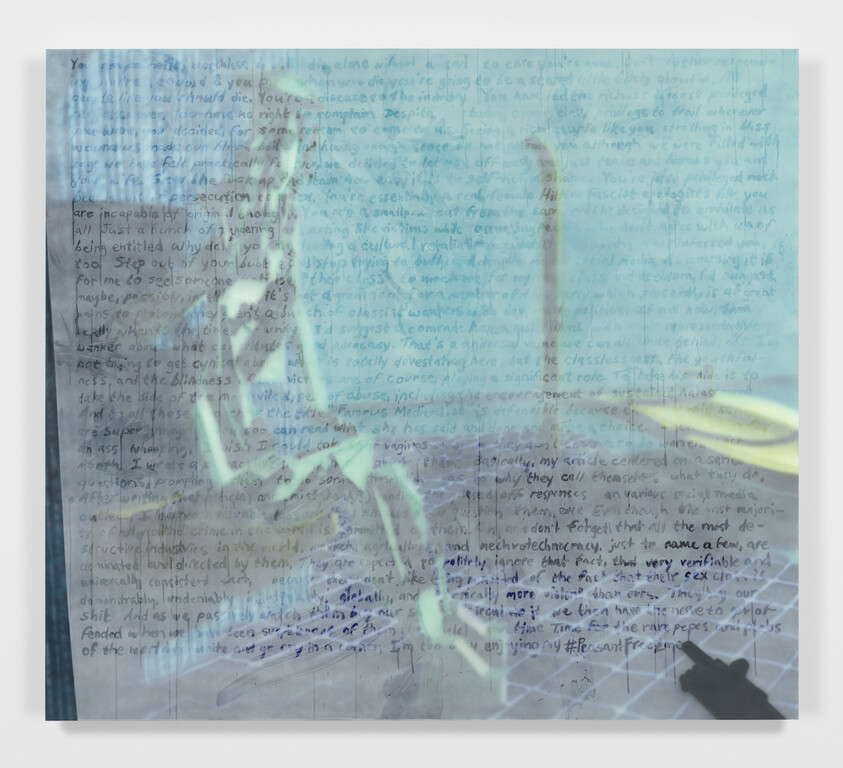
Avery Singer (American, b. 1987) makes paintings built from 3D-modeled compositions, translating renders made in software such as SketchUp and Blender into large airbrushed acrylic canvases.,The finished paintings resemble a digital render that “somehow got onto linen”, built from thin layers of airbrushed acrylic and hand-applied liquid rubber.
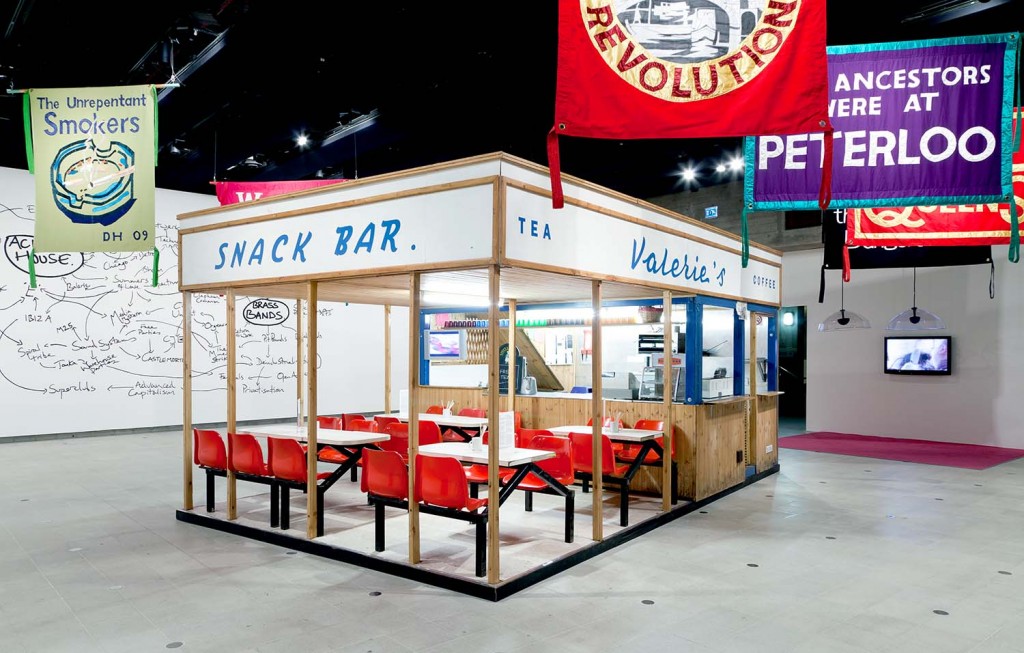
Singer's work was included in “Speculations on Anonymous Materials”, curated by Susanne Pfeffer at the Fridericianum in Kassel in 2013 alongside Jon Rafman and Simon Denny, a show she has described as important for postinternet art.She was included in Ralph Rugoff's “La vie moderne” at the 13th Biennale de Lyon in 2015.Her work has entered the collections of MoMA, the Met, the Guggenheim, the Whitney and Tate, and she exhibited at the Venice Biennale in 2019.
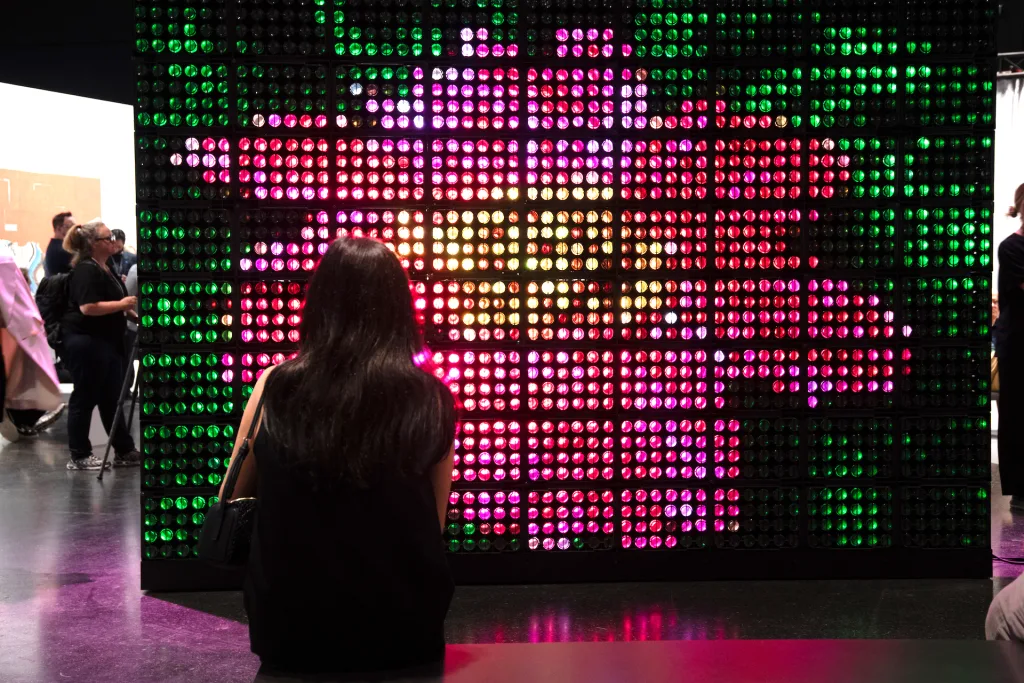
In 2022 her exhibition “Free Fall” at Hauser & Wirth in London paired a serene office aesthetic with moments of horror, considering 9/11 trauma and corporate anonymity.In 2025 she showed Shit Coin Maxi, a large composite image built from two digital wallets she found on X, at Art Basel's Zero10 digital art sector with Hauser & Wirth.,Discussing the painting in Hauser & Wirth's magazine Ursula, Singer said she used AI to generate imagery she layered over hand-painted, digitally inspired material, applying liquid rubber between layers “very sloppily by hand, to signal that this is a painting—not a printout or a digitally produced object”.
In November 2025 she initiated and led a roundtable on “post-AI” art for ArtReview with Simon Denny, Holly Herndon, Mat Dryhurst and Jon Rafman.In June 2026 her exhibition “WAR_OVERLAYS” at Hauser & Wirth Zurich marked the first time she incorporated AI into her painting process. The series layers portraits of a fictional poker player with imagery generated from damaged war photography and other imperfect training data, drawing on Jean Baudrillard's writings on the Gulf War.